Gamification through mobile apps: A must-try strategy
In today’s fast-paced business landscape, it is imperative to not only stay on trend to engage both employees and customers but also to find innovative ways for engagement and satisfaction.
One effective method gaining popularity is gamification, which leverages game mechanics to boost participation, engagement, and productivity.
Let’s explore why business owners should consider developing mobile apps that incorporate gamification strategies, inspired by insights from EveryoneSocial.
What is Gamification?
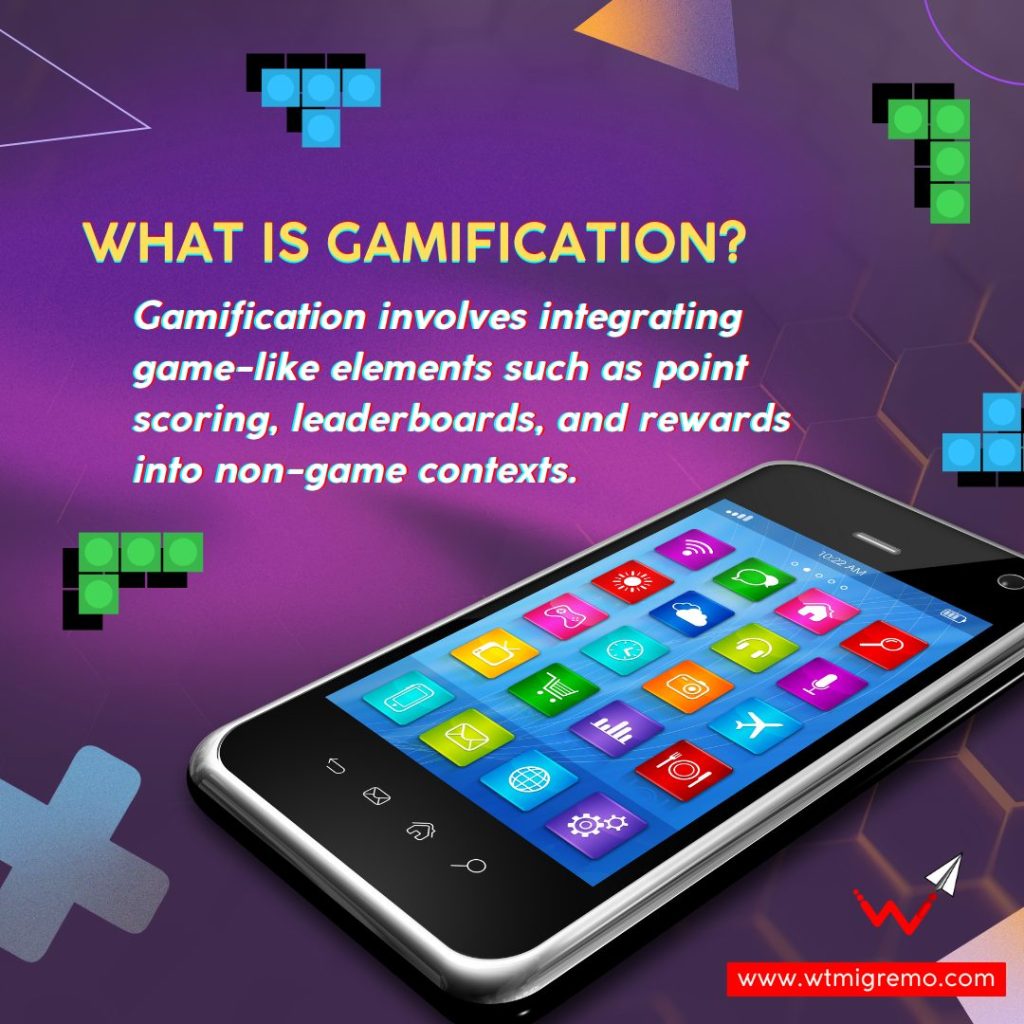
Gamification involves integrating game-like elements—such as point scoring, leaderboards, and rewards—into non-game contexts. This approach is designed to motivate people to engage more deeply with tasks, whether in sales, marketing, HR, or customer interaction. It’s not just about playing games at work; it’s about creating a more engaging and productive environment.
Key Components of Gamification
1. Point Scoring: Points provide rapid feedback to users, rewarding them for accomplishing tasks and promoting ongoing participation. For example, sales teams can receive points for meeting certain goals, creating a competitive yet collaborative workplace.
2. Leaderboards appeal to our inherent drive for recognition and competition. Displaying top achievers drives employees to enhance their performance because they want to see their names at the top.
3. Rewards, whether material or intangible, foster a sense of accomplishment. They can range from monetary rewards and gift cards to non-monetary incentives such as public recognition or more time off.
The Benefits of Gamification
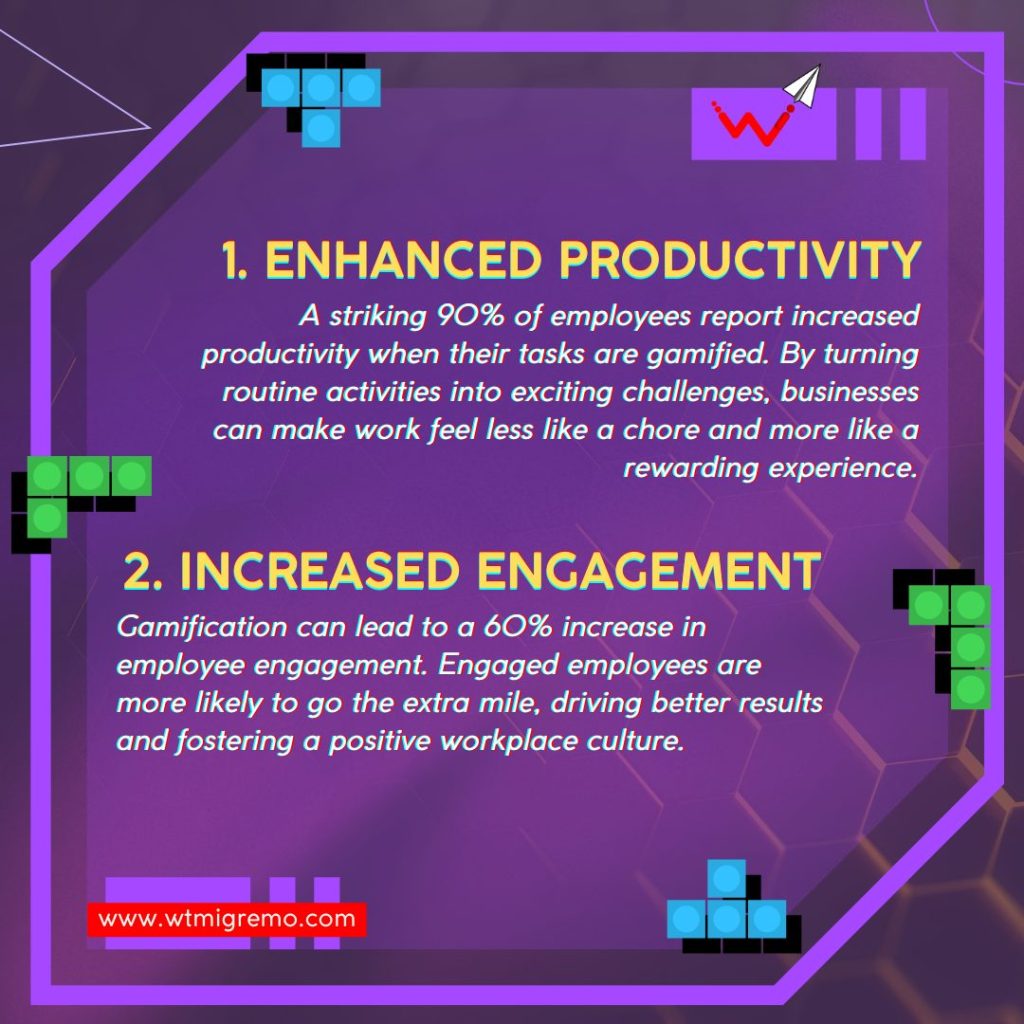
Enhanced Productivity. A striking 90% of employees report increased productivity when their tasks are gamified. By turning routine activities into exciting challenges, businesses can make work feel less like a chore and more like a rewarding experience.
Increased Engagement. Gamification can lead to a 60% increase in employee engagement. Engaged employees are more likely to go the extra mile, driving better results and fostering a positive workplace culture.
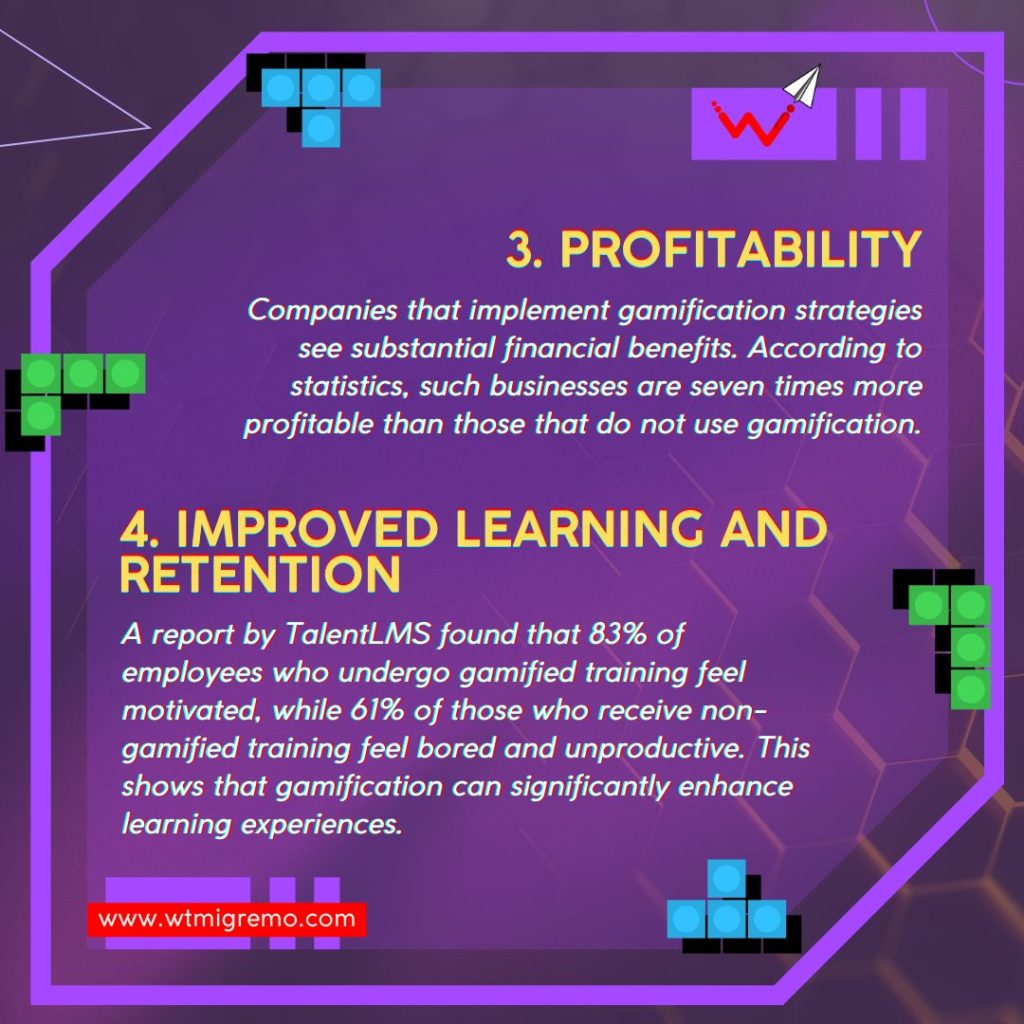
Profitability. Companies that implement gamification strategies see substantial financial benefits. According to statistics, such businesses are seven times more profitable than those that do not use gamification.
Improved Learning and Retention. A report by TalentLMS found that 83% of employees who undergo gamified training feel motivated, while 61% of those who receive non-gamified training feel bored and unproductive. This shows that gamification can significantly enhance learning experiences.
Implementation of Gamification
💡 Start Simple. Avoid elaborate systems that may overwhelm the end user. Start with simple things like point systems and leaderboards to gradually ramp up active participation.
💡 Focus on Long-term Engagement. The goal is to keep people interested over time. Plan methods that keep the experience fresh and enjoyable. Do seasonal modifications on the challenges and prizes.
💡 Reward Participation, Not Just Winners. While it is crucial to recognize outstanding performers, encouraging widespread participation can help to maintain high levels of engagement and motivation.
💡 Creative Rewards. Consider non-monetary rewards that provide personal recognition, such as a lunch with the CEO or behind-the-scenes involvement for marketing purposes, or a LinkedIn endorsement from a senior executive for employees. These can have a greater impact and long-term value than expensive material prizes.
💡 Transparency. Make sure that all participants understand the rules and goals of the gamification program. Transparency builds trust and promotes fair play.
💡 Track and Report. It’s all about making people feel that they are valued and involved. Thus, it’s best to use tools to track progress and share outcomes. This feedback loop enables individuals to recognize their accomplishments and determine how they may improve.
Real-World Success
Real-life example no. 1. INSTRUCTURE.
Instructure, an educational technology business that leveraged EveryoneSocial’s leaderboard feature, provides a convincing example of successful gamification. After incorporating gamification into their staff engagement approach, they noticed a 336% increase in user participation and a 3,846% increase in content sharing in just two months. This highlights the potential influence of effective gamification on business outcomes.
Real-life example no. 2. Domino’s Pizza’s Pizza Hero app
Domino’s Pizza is a stellar example of how gamification can transform business operations and customer engagement. In 2009, Domino’s launched the “Pizza Hero” app, a game that allowed players to virtually make a pizza by spreading sauce, sprinkling cheese, and toppings. The game recreated the actual pizza-making process utilized in Domino’s kitchens.
The app created a fun, interactive way for customers to engage with the brand, boosting overall engagement. Users spent significant time on the app, enjoying the challenge of making the perfect pizza. It also translated into tangible business outcomes, as users who played the game were more likely to place real orders, leading to a notable increase in sales.
Beyond customer participation, Domino’s used the game for internal training purposes. New employees practiced creating pizzas in a risk-free virtual environment, enhancing their abilities while lowering training expenditures.
Lastly, this inventive approach allowed Domino’s to stand out in a competitive market, fostering brand loyalty. With the interactive experience, customers choose Domino’s over rival pizza joints.
Imagine a workplace where employees are motivated, customers are more engaged, and your bottom line steadily improves. This isn’t a far-fetched dream but a tangible reality with gamification. By integrating game elements like point scoring, leaderboards, and rewards into a mobile app, you can revolutionize the way your team and clients interact with your brand.
Explore gamification for your business today and watch it thrive! Contact us WT Migremo Systems, Inc. for your mobile app requirements!