Inventory Management System: 20 Common Challenges
Inventory management is no longer just about counting stock—it’s a strategic function that affects cash flow, customer satisfaction, and operational efficiency. As supply chains grow more complex, businesses must navigate a range of challenges to stay competitive.
Here are 20 of the most common inventory management hurdles and how they affect your operations.
1. Fragmented Tracking Systems
Manual tracking across spreadsheets or disconnected software leads to duplication, errors, and delays. Even small businesses benefit from integrated inventory platforms with real-time updates, barcode scanning, and accounting sync.
2. Warehouse Workflow Bottlenecks
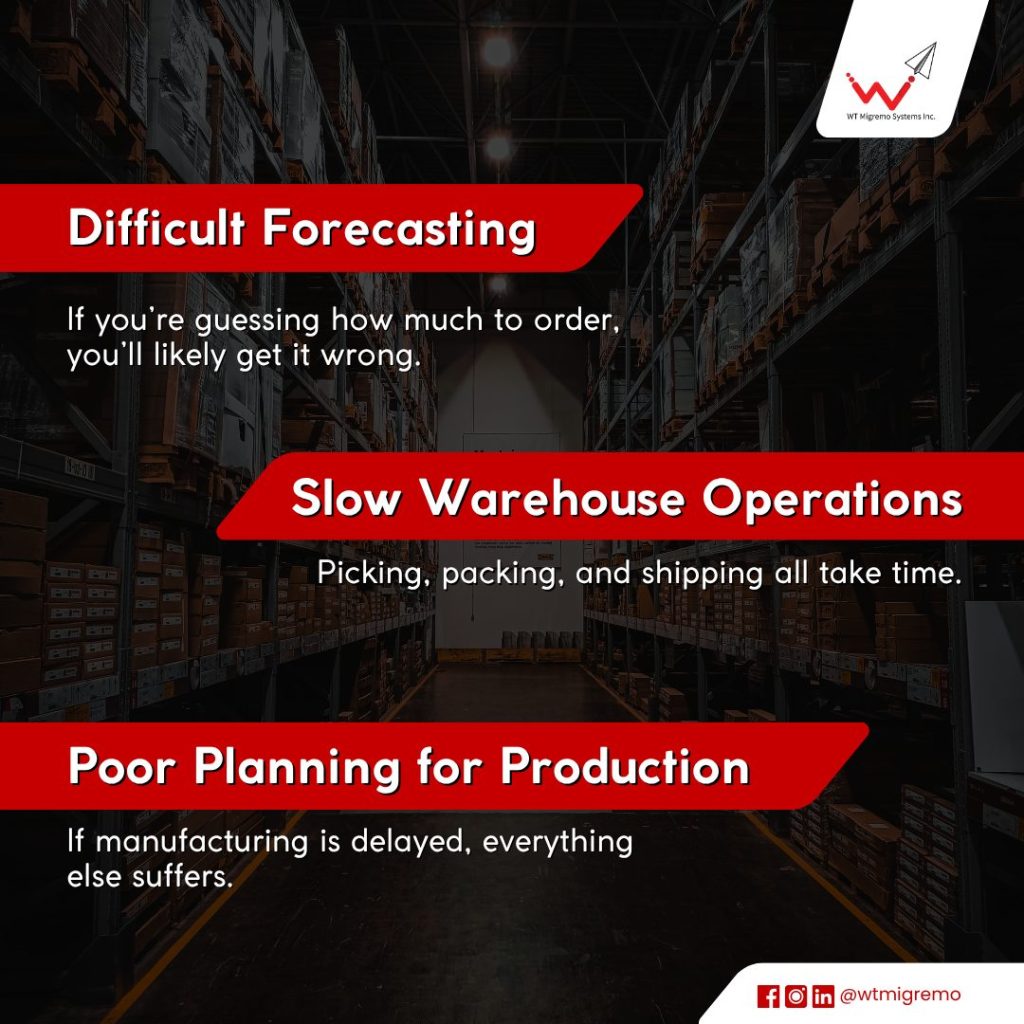
From receiving and putaway to picking, packing, and shipping, warehouse operations are labor-intensive. Without automation tools like RFID, robotics, or warehouse management systems (WMS), inefficiencies multiply.

3. Data Inaccuracy
Real-time inventory visibility is essential. Annual physical counts are outdated—modern systems use cycle counting, IoT sensors, and predictive analytics to maintain accuracy.
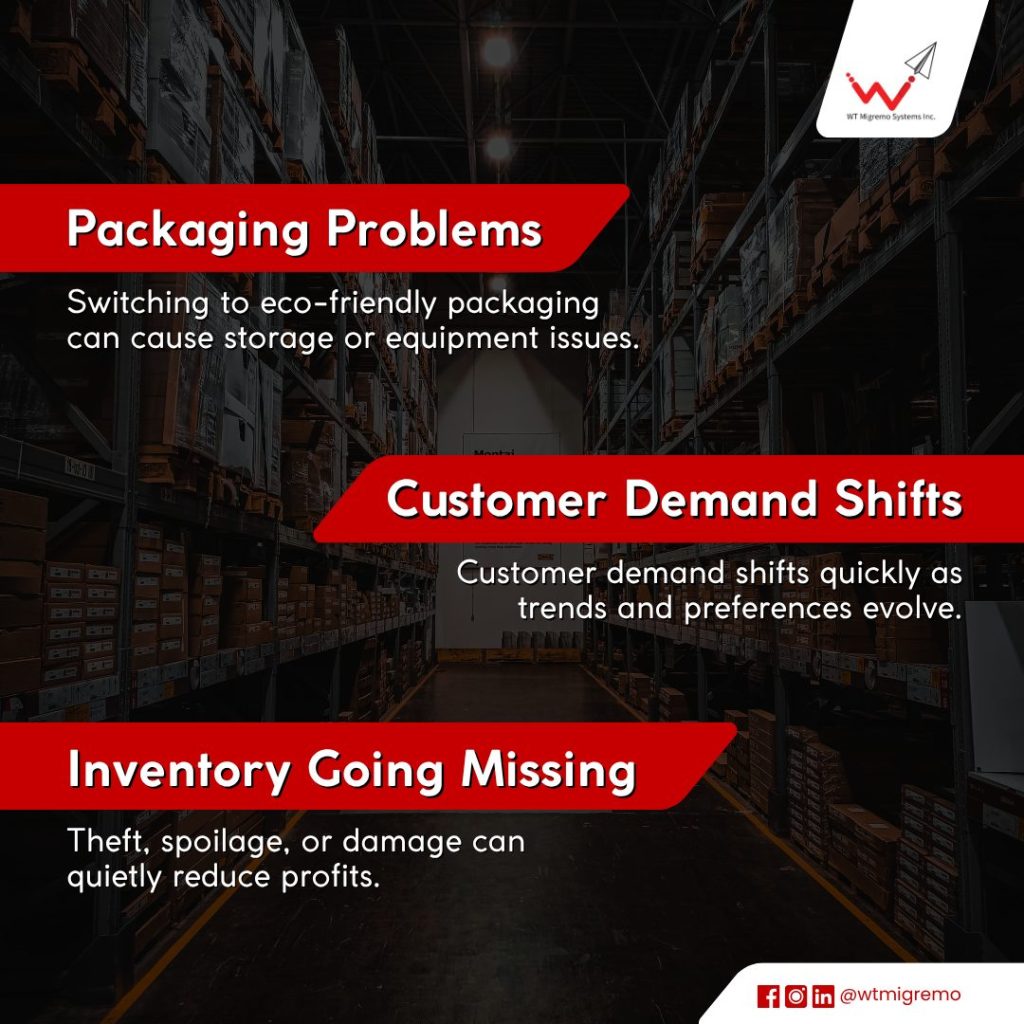
4. Volatile Demand Patterns
Consumer preferences shift rapidly due to trends, seasonality, and global events. Demand forecasting tools powered by AI and historical data help balance stock levels and avoid missed sales or excess inventory.
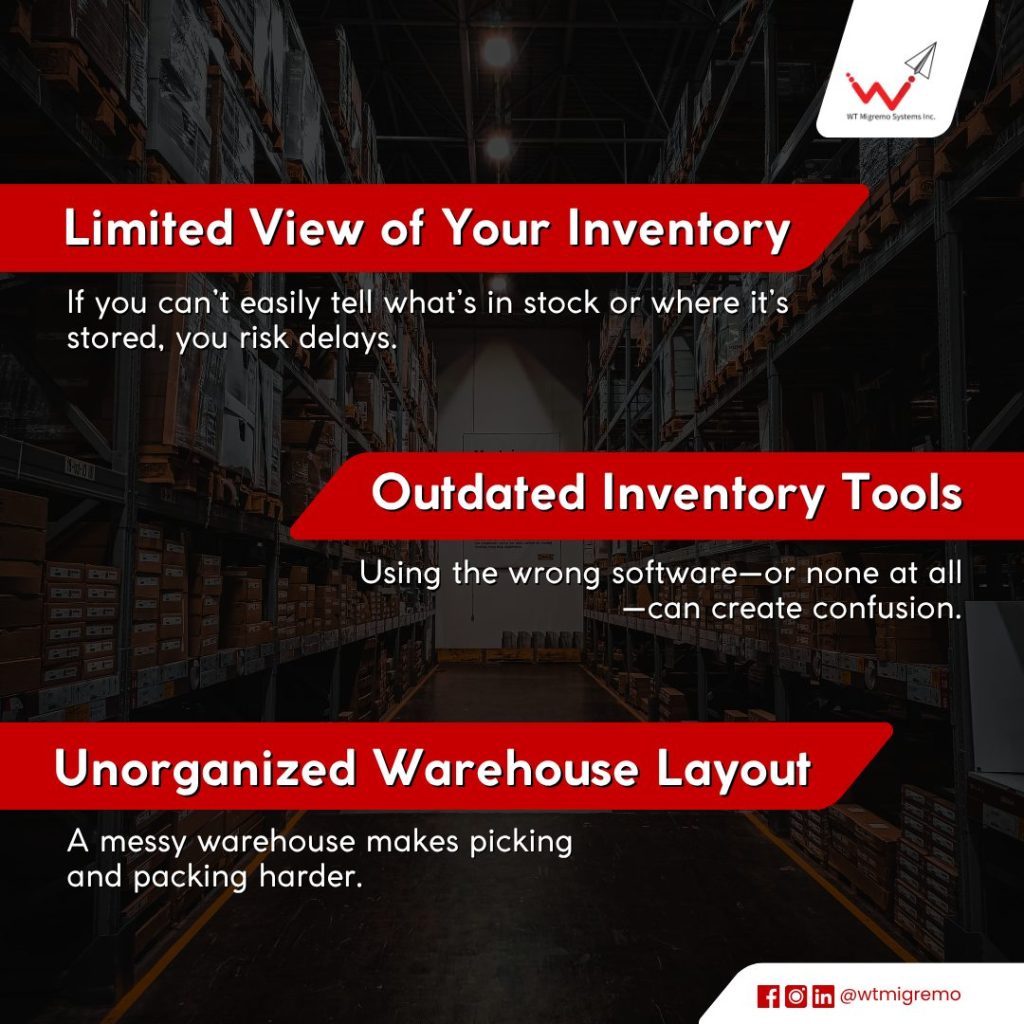
5. Limited Inventory Visibility
Poor labeling, disorganized shelving, and lack of digital mapping make it hard to locate items. RFID tags, bin tracking, and mobile scanning improve accuracy and speed.
6. Manual Documentation
Paper-based inventory logs are prone to loss and error. Cloud-based systems offer secure, scalable alternatives that support multi-location operations and remote access.
7. Sensitive or Problematic Stock
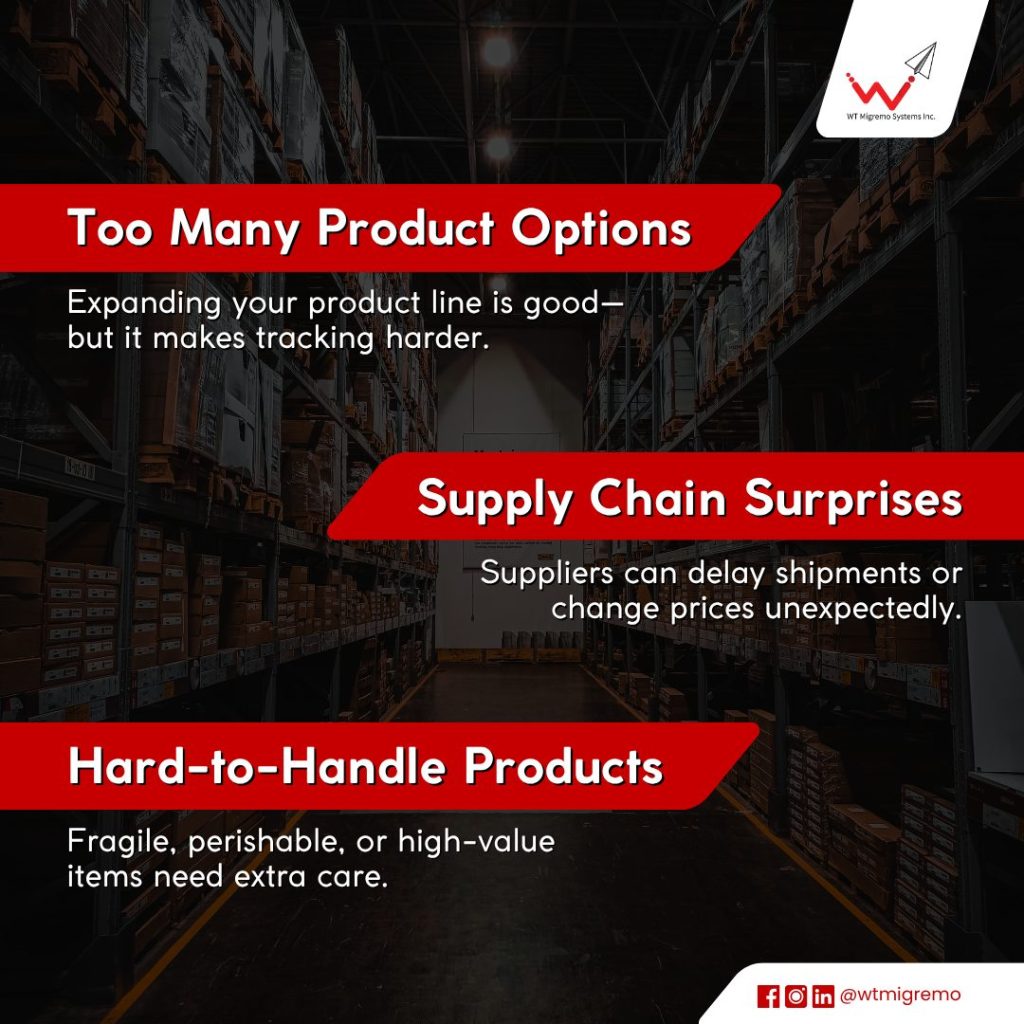
Perishables, fragile goods, and high-value items require specialized handling. Temperature-controlled zones, tamper-proof packaging, and serialized tracking reduce risk.
8. Supply Chain Volatility
Global disruptions—from pandemics to port delays—impact lead times and availability. Agile inventory strategies, diversified sourcing, and buffer stock planning are essential.
9. Space Constraints
Poor warehouse layout leads to congestion and delays. Smart design using slotting optimization and vertical storage solutions maximizes space and improves flow.
10. Order Management Gaps
Overselling or stockouts damage customer trust. Integrated order management systems (OMS) with real-time inventory sync across channels prevent fulfillment errors.
11. Competitive Pressure
Rising demand for raw materials and global competition drive up costs. Strategic sourcing and supplier relationship management help mitigate risks.
12. Packaging Evolution
Eco-friendly packaging introduces new storage and handling challenges. Businesses must adapt with new shelving, climate controls, and shorter turnover cycles.
13. Product Line Expansion
E-commerce enables broader product offerings, but managing SKUs across platforms requires robust inventory planning and fulfillment automation.
14. Overstocking
Excess inventory ties up capital and increases storage costs. ABC analysis and just-in-time (JIT) strategies help optimize stock levels.
15. Inventory Shrinkage
Losses from theft, spoilage, or miscounts erode profits. Implementing security protocols, surveillance, and audit trails can reduce shrinkage.
16. Poor Production Planning
Without accurate inventory data, production schedules falter. ERP systems align inventory with manufacturing timelines to avoid delays and cost overruns.
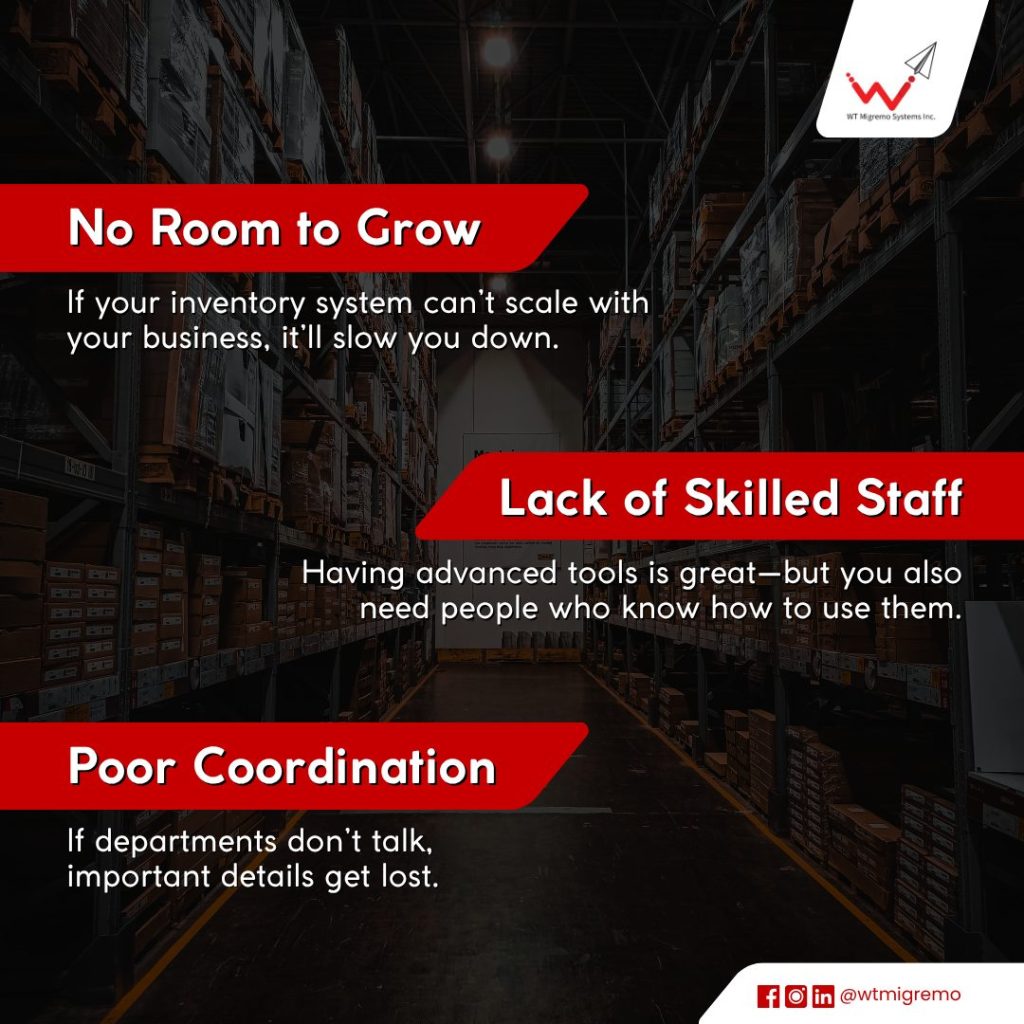
17. Talent Shortage
Finding skilled inventory managers with tech expertise is challenging. Investing in training and user-friendly platforms helps bridge the gap.
18. Communication Silos
Lack of cross-departmental collaboration leads to missed opportunities. Centralized dashboards and shared KPIs foster transparency and alignment.
19. Outdated Processes
Manual workflows don’t scale. Automation, mobile access, and AI-driven insights streamline operations and reduce human error.
20. Software Limitations
Choosing the right inventory software is daunting. Look for platforms that offer scalability, integration with ERP/CRM systems, and strong vendor support.
Stay ahead of the curve and make smarter inventory decisions with wtmigremo.com. Message our team for a free demo of our Inventory Management System. 🚀